

Wanna know how to build self-discipline without willpower; so your goals finally feel downstream instead of an endless sludging, uphill battle you have to white-knuckle? This post is dedicated to overachievers and overthinkers who are DONE shrinking their ambition and are ready to build a system that makes follow-through feel normal.
You know that pressure, right? The one that stresses your body so hard that you feel existentially threatened?
You want to feel significant and effective, not because you need applause, but because you refuse to half-ass life. However, when your brain is cluttered and your routines are vague, your drive turns into stress, and your pride starts protecting itself by playing small.
What you’re going to learn is how to build self-discipline without willpower: systembuilding 101; using Niklas Luhmann’s “I only do what is easy” approach, plus the external brain logic from Getting Things Done, and the systems-first habit logic from Atomic Habits. You’ll also see why your shadow part hijacks discipline when tasks feel unsafe, unclear, or loaded with old shame.
After you have learned to build self-discipline through systems with clear-headed rationality instead of panic, and with kick-ass confidence instead of self-doubt roundabouts? You’ll waste less energy on internal arguing, and you’ll feel more in control of your direction, your time, and your self-respect.
This post is all about how to build self-discipline without willpower so you can stop proving your worth through suffering, and start living like someone who refuses to half-ass life.
How To Build Self-Discipline Without Willpower
Let’s start with defending your honour a little, because this is a very common misconception. Your “lack of discipline” is not a character flaw; it’s your nervous system waving a red flag. When a task stays vague, big, or emotionally loaded, your shadow part steps in to protect you from the threat of failure, rejection, or humiliation. Then Daniel Goleman’s emotional hijack happens; stress takes the wheel, and your smart brain goes offline. Suddenly, you NEED relief, not progress.
What I would like you to consider is that willpower is a terrible long-term strategy anyway. In How to Take Smart Notes, Ahrens points out that willpower depletes quickly and that self-control has a lot to do with environment. Good news for you all, because the environment can be changed. That’s the whole game. You don’t “become disciplined” by clenching harder; you become disciplined by designing a workflow that makes the next right move feel easy, clear, and safe enough to start.
You’re Not Undisciplined; You’re Trying To Carry Your Whole Life In Your Skull
Overachievers don’t procrastinate because they don’t care. You procrastinate because you care so much that engaging feels expensive. When you keep everything in your head, your mind turns into a storage unit, and stress turns into anxiety because there is no finish line. Your nervous system keeps scanning; it does not trust that anything is handled.
RELATED POST:
How To Stop Procrastinating: Short Term Solutions To Snap Yourself Out Of It
That’s why the hustle advice fails you. It tells you to “push through.” Meanwhile, your psyche is screaming, “This is unclear, this is risky, this is too big, and I don’t want to feel that shame again.” So the shadow protects you with avoidance. Not because you chose it, but because it’s subconscious, and it learned that hiding is safer than failing.
This is also where social hierarchy stuff quietly messes with you. Society still acts like your output equals your value, so when you stall, your pride panics. Then you either overcompensate or you shrink your goals out of pride protection. Both paths keep you stuck.
So start with being a little LESS hard on yourself! Discipline begins with containment. Your mind needs an external place to put open loops, next actions, and decisions, so you can think clearly again. That is not “productivity.” That is power.
Luhmann’s Secret Was Not Genius; It Was A System You Could Trust
Niklas Luhmann produced an absurd amount of high-quality work, and he did it without the usual suffering badge. He openly said he never forced himself to do anything he didn’t feel like doing. If he got stuck, he did something else. He only wrote when he immediately knew how to do it. Aka, only down-stream flow, no uphill battles!
People love to treat that like a mystical talent. However, his system, the zettelkasten, or slip-box, did the heavy lifting; he didn’t “think everything by himself.” His system carried thought forward, and it made starting feel easy because he never started from zero.
Notice what that implies about self-discipline. Luhmann did not rely on heroic willpower. Instead, he relied on a structure that let him move seamlessly between tasks without losing the bigger picture. A good structure becomes something you can trust; it relieves you from remembering everything, so your attention can go to content and decisions.
If you loved the “close open loops” approach from Clear Your Mind, this is the next level. Externalise, yes. Then connect. Then let the work carry you forward.
Let’s make managing stress & anxiety a little bit more practical by diving into our problem analysis strategy. There’s a solution to every problem! You’ll feel extremely relieved once you have a strategy to get out of the messy parts. We made a printable & anxiety tracker to help you out. Simply fill out the form below:
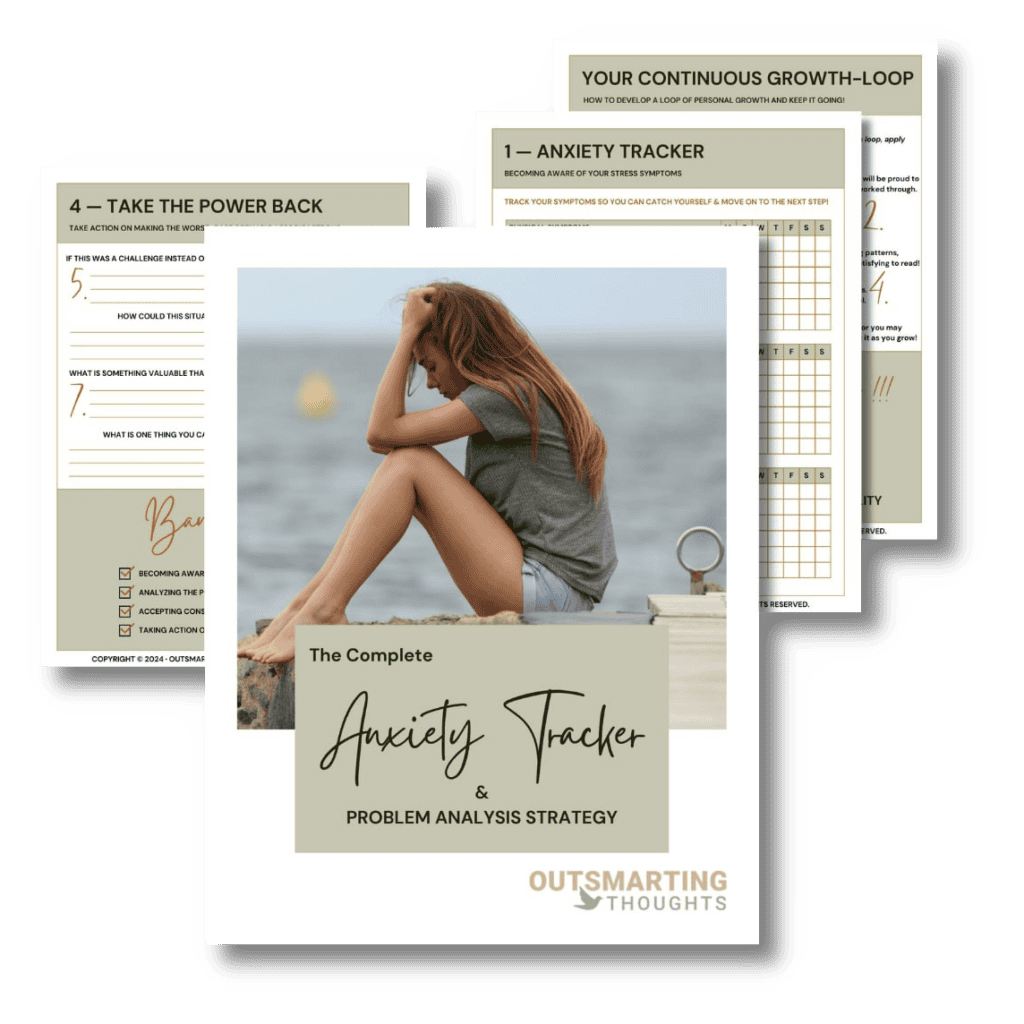
Want a free
ANXIETY TRACKER &PROBLEM ANALYSIS STRATEGY? Overcome your anxiety and stop overthinking with this
FREE Anxiety Tracker & Problem Analysis Strategy
Simply fill out the form below to get this strategy
delivered straight to your inbox!
Stop Planning Your Discipline; Build Infrastructure That Makes Action Obvious
Planning sounds responsible, but it often makes you more rigid than necessary. Planning imposes a structure on you, which makes you inflexible; therefore, you must push yourself to stay on track. A strong systematic workflow does the opposite. It creates lanes you can move through, even when you discover something new, even when your energy shifts.
RELATED POST:
How To Deal With Time Anxiety: A Must-Have Overachiever’s Strategy To Get Everything Back Under Control
When you don’t capture what has your attention, some part of you will not trust the picture of your world. That distrust creates mental guarding. In other words, your brain keeps checking; it can’t fully engage. The first relief is not motivation. The first relief is collecting “stuff” into one trusted place.
Here’s the real shift; you don’t rise to the level of your goals. You fall to the level of your systems. So your job is not to “want it more.” Your job is to make the next action so specific that your nervous system doesn’t have to negotiate. When cues are clear, action becomes obvious. When action becomes obvious, discipline stops feeling like a fight.
So build infrastructure: a capture place, a next-action list, and a simple routine for turning vague pressure into one physical step.
How To Build Self-Discipline Without Willpower; A No-Fluff Setup You Can Start Today
Start with one brutal truth: you cannot self-control your way out of an unstructured life. If your environment keeps feeding you ambiguity, your shadow will keep pulling the emergency brake because it just sniffs out the polar opposite in you. So you design the environment to protect your ambition instead of triggering it.
First, give your brain a home base. Capture every open loop that tugs at you, personal and professional, until your mind stops scanning. Then convert each item into an intended outcome and a next physical action. Keep it physical. “Handle email” is vague. “Reply to X with Y decision” is real.
Second, build Luhmann lanes. When you feel stuck, you don’t quit; you switch lanes. You move from heavy work to lighter work, from creating to processing, from writing to collecting. That is not avoidance. That is maintaining flow without breaking trust with yourself.
Third, stack the habit to a cue. Attach your next-action review to something that already happens, because vague timing creates self-doubt roundabouts. Keep the cue specific, because specificity kills inner debate.
Finally, treat discipline like self-respect, not self-punishment. You build systems because your life matters to you. You want to self-actualise, not survive. You’re not trying to be ‘better than others’; you’re trying to be fully alive on your own terms.
How To Build Self-Discipline Without Willpower (Summary)
How to build self-discipline without willpower is about way more than “trying harder.” When tasks feel vague or emotionally risky, your shadow part protects you from shame and failure by pulling you into avoidance. Then emotional hijacking kicks in, and you chase relief instead of progress. Your nervous system does not need more pressure; it needs safety, clarity, and structure.
The strategy is simple, not easy. Externalise open loops into a trusted system. Then make actions specific and obvious. Finally, build workflow lanes, so you can switch tasks without breaking momentum. That’s how you stop relying on willpower and start relying on infrastructure.
Picture your future self moving through the day without the constant mental buzzing. You still aim high, yet you feel calm. You still want significance, yet you don’t need suffering to prove it. Your systems hold you; therefore, your ambition gets to breathe.
I wish you the audacity to stop shrinking your goals out of pride protection, and the fierce energy to build a life that supports your greatness. Go get your grip; then go get your shit done.
This post was all about how to build self-discipline without willpower so you can stop proving your worth through suffering, and start living like someone who refuses to half-ass life.
We aim to help you out as much as possible, but please keep in mind that the content is only for general informational and educational purposes. We offer our services based on independent research and life-experience only, and so our strategies can never serve as a substitute for professional advice. Trust me, we do not have 'everything figured out', are all still huge works in progress, but hey, what works for us, might work for you too! This is allll up for you to decide... It might not work for you, and that's okay, so cherrypick the stuff that resonates and leave the stuff that doesn't, and let's go!