

Wanna know why ‘first world problems’ still mess with your head even though you technically ‘have nothing to complain about’? This post is dedicated to dismantling the shame around first world problems so you can stop dismissing real psychological signals as weakness.

You might recognise the pattern. Life looks fine on paper, yet something feels off. Comfort is there, safety is there, resources are there, and still your motivation dips, your spending gets erratic, or your mood starts spiralling. Overachievers like you often want to be grateful, grounded, and resilient. However, instead, you end up minimising your struggles while quietly self-sabotaging.
What you’re going to learn is why first world problems are not fake, spoiled, or embarrassing. In fact, they emerge when survival is no longer the main issue and deeper psychological needs step into the spotlight. You’ll see how dismissing those needs fuels impulse buying, financial turbulence, and emotional restlessness or existential crises.
After you have learned to recognise first world problems as unmet needs & calls for meaning instead of personal flaws, you will be able to respond more strategically, stop chasing relief through spending, and build a life that actually resonates and aligns with you. Those benefits don’t just improve your money decisions. They restore agency, sharpen your focus, and bring back kick-ass confidence rooted in self-respect.
This post is all about first world problems, so you can stop shaming yourself for growth pains and start treating them as the next level of personal development.
First World Problems
The psychology behind first world problems gets misunderstood because money solves survival faster than it solves meaning. Money works like a hammer. It builds safety, comfort, and options. Once those needs are met, the tool has done its job. But what comes next is not financial. It’s psychological.
Power and money can corrupt, no doubt. That corruption, however, doesn’t originate in money. Trauma, emotional hijacking, and unexamined needs turn resources into amplifiers of unresolved tension. Add financial illiteracy and a consumer culture designed to distract rather than fulfil, and confusion and mismanagement become almost inevitable.
Beliefs strongly affect our behaviour. When you believe first world problems are illegitimate, you suppress signals that point toward GROWTH. And what’s worse? That suppression doesn’t remove the need. It reroutes it into restlessness, overspending, and chronic dissatisfaction. Contrary to popular belief, the discomfort isn’t ingratitude or entitlement. It’s evolution knocking on the door. And it’s searching for MEANING…
First World Problems Appear When Survival Is No Longer the Issue
First world problems don’t show up because you’re spoiled. They show up because your nervous system is no longer fighting for basic survival. Once food, shelter, and safety are covered, your psyche shifts focus. That shift is not optional. It’s developmental. We shouldn’t shame it, we should be celebrating that we made it to the next stage!
In fact, when lower-level needs get filled, higher-level needs get louder. Meaning, contribution, and direction step forward. When those needs go unanswered, discomfort follows. That discomfort often confuses people because it doesn’t look dramatic. It looks like boredom, irritation, emptiness, or vague dissatisfaction.
RELATED POST:
Shopping Addiction & The Link To Boredom And A Dissatisfied Life
(It’s Not You, But Your Life Conditions & Environment)
Counterintuitively, many people try to silence this stage with gratitude lectures. Others try to buy their way out of it. New goals, new purchases, new distractions. None of it sticks, because the problem is not a lack of stuff. It’s a lack of meaning, and a lack of alignment.
Newly wealthy people often hit this wall hard. Money removes constraints, yet purpose remains unresolved. Without survival pressure, unresolved questions surface. Who am I without struggle? What am I building toward? What actually matters now? And oh my Loooord, what am I actually doing here on this spinning rock we call Earth?
Let’s not sugarcoat it. Dismissing this phase keeps you emotionally stuck. When growth signals get ignored, they mutate into impulsive behaviours. Overspending becomes stimulation. Consumption becomes identity. Relief replaces direction.
First world problems are not complaints. They are indicators that you’ve moved up a psychological layer and need a new operating system. It’s time to find you a deeper meaning, a purpose, and an answer to ‘why you are here’.
Why Comfort Alone Never Satisfies for Long
Comfort stabilises you, sure, but it doesn’t fulfil you. That distinction matters more than most people admit. Once your environment stops threatening you, your mind looks for something else to engage with.
And let me tell ya, this is where many overachievers get lost. You’ve mastered productivity, responsibility, and resilience. Now the old rewards stop working. Hustle feels hollow. Shopping feels empty. Rest feels unsatisfying. Enter an existential crisis in 3, 2, ….
What I would like you to consider is this. Humans don’t just need comfort. You NEED to feel significant. I know this is scapegoated everywhere as ‘being egoic’, but we should not forget that there is a healthy side to it when you search for meaning and purpose…. You need to KNOW, or FEEL that your actions matter. You need to see progress toward something that resonates and aligns with you.
When significance gets ignored, self-doubt roundabouts appear. You start questioning your choices. You chase stimulation & confuse movement with direction. Financial turbulence often follows because money becomes the quickest way to feel something again.
Excuse me being frank, but I absolutely resent wishful thinking, and this is wishful thinking. Comfort without purpose does not create peace. It creates stagnation disguised as luxury.
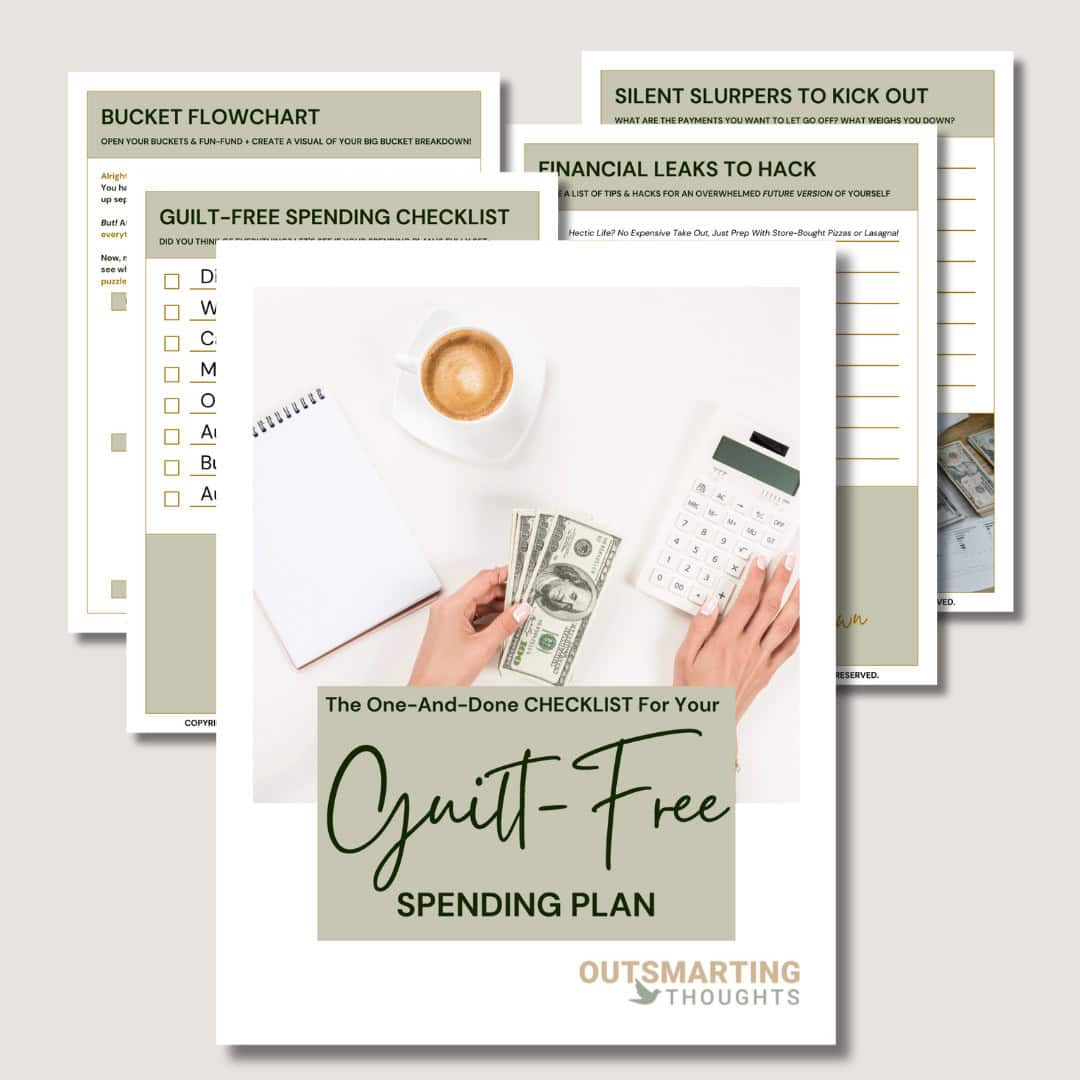
Owning a cashflow strategy is a skill that’ll give you some serious advantages in life. I think budgeting is an aligned action with taking life seriously, and I seriously believe life will reward you for it. If you’re not into high-maintenance strategies like ‘tracking your spending’ and just want to sit down ONCE to direct your financial future, our Guilt-Free Spending Plan Printable is the right cashflow strategy for you! Don’t let anybody outsmart you out of your own money and start budgeting today by simply filling out the form below:
Want a free
ONE-AND-DONE CHECKLIST for aGUILT-FREE SPENDING PLAN? Free up your bandwidth and stop overthinking with this
FREE One-And-Done Checklist for your Guilt-Free Spending Plan!
Simply fill out the form below to get this strategy
delivered straight to your inbox!
Why Shaming First World Problems Fuels Overspending
Shame doesn’t eliminate needs. In fact, it drives them underground. When first world problems get labelled as illegitimate, you stop addressing them directly. That’s when indirect coping kicks in.
Impulse buying is a prime example. It offers short-term stimulation without requiring self-examination. The relief fades quickly. Guilt steps in. Then the cycle repeats. What looks like financial irresponsibility is often an unmet psychological need wearing a credit card. If only you could BUY significance, meaning or purpose, right?
RELATED POST:
How To Stop Overspending: The Strategy You NEED To Regain Control (Without The Self-Blame Spiral)
Pause and analyse the situation. Overspending is rarely about objects. It’s about emotion regulation & about distraction. It’s about reclaiming a sense of aliveness when direction feels missing. So if you wanna solve it, dig into your psyche, not your innocence..
Blaming yourself misses the point. Blaming money misses it too. In fact, I would argue that every time you BLAME (in general), you stop searching for a solution. You just gave your power away in exchange for a false belief that lets you feel like you don’t have to do anything about it. And guess who smells this miles away as the ideal prey?? You live in a consumer culture engineered to exploit this exact vulnerability. Temptation isn’t accidental. It’s strategic.
On top of that, you confuse doing something misaligned with being misaligned. Seeing your own mistakes doesn’t mean you have to internalise them into identity, especially not if those mistakes then create self-sabotaging beliefs about yourself! One impulsive decision turns into a character attack. That self-judgment creates more tension, not less.
Once innocence gets restored, behaviour changes wayyyy faster. When you treat missteps as data instead of verdicts, strategy becomes possible. Systems replace willpower. Direction replaces guilt. Progress resumes. And you can finally breathe again, because you have your sense of control back!
First World Problems Are an Invitation, Not an Excuse
So here is my belief: First world problems signal that you’re ready for self-actualisation. Not in a fluffy sense. In a practical, grounded, do-something-with-your-life sense.
This stage asks different questions. What are you building? Where are you headed? What deserves your energy now that survival no longer dictates every move? What do you want to do on this planet will all that time you still estimate to have? Those questions demand structure and soul-searching, not shame.
Money management becomes essential here. Not because money equals happiness, but because money provides you with the power to choose. Choice creates space to pursue meaning deliberately instead of accidentally.
Financial autonomy isn’t about excess. It’s about alignment. It’s about directing resources toward experiences, projects, and relationships that reinforce YOUR sense of purpose. When spending becomes intentional, impulsivity loses its grip.
Let’s move past fluff and flaky wishful thinking. Growth requires systems. A place for your thoughts. Clear priorities. Healthy boundaries. Without those, first world problems turn into endless dissatisfaction loops.
Refusing to half-ass life means taking this phase seriously. Not to outperform others. Not out of pride. But because you refuse to waste your time on autopilot.
First World Problems (Summary)
The psychology behind first world problems shows that money solves survival faster than it solves meaning. Resources function like tools. Trauma, emotional hijacking, and unmet needs determine how those tools get used. When comfort rises, significance demands attention.
The strategies in this post focus on recognising unmet needs, separating behaviour from identity, and replacing shame with systems. By treating first world problems as growth signals, you reduce impulsive spending, regain clear-headed rationality, and act more strategically.
Picture a future where discomfort no longer confuses you. You respond deliberately & invest intentionally. You build a life that feels purposeful instead of performative. This can be the next stage of your life, as long as you dare to take that darn red pill…
I wish you the courage to stop minimising your inner signals, the discipline to build systems that support growth, and the fire to fully step into the next version of yourself. Go claim it.
This post was all about first world problems, so you can stop shaming yourself for growth pains and start treating them as the next level of personal development.
We aim to help you out as much as possible, but please keep in mind that the content is only for general informational and educational purposes. We offer our services based on independent research and life-experience only, and so our strategies can never serve as a substitute for professional advice. Trust me, we do not have 'everything figured out', are all still huge works in progress, but hey, what works for us, might work for you too! This is allll up for you to decide... It might not work for you, and that's okay, so cherrypick the stuff that resonates and leave the stuff that doesn't, and let's go!