

Wanna know how to overcome shopping addiction without drowning in shame or guilt? This post is dedicated to showing you why you’re not the problem; and how to reclaim control.

Let’s be real: living in a consumer culture means you’re ambushed with temptation everywhere you turn. Ads follow you across platforms, emails scream about discounts, and influencers parade their latest must-haves. If you’ve fallen into overspending or impulse buying, you’re not broken; you’re a normal, decent, feeling human being reacting to a culture designed to trip you up.
As overachievers, we often scapegoat ourselves when we stumble. You buy something impulsively, and suddenly you’re labeling yourself as weak or irresponsible. But please, show some compassion to yourself, pause & analyze the situation: you confused doing something bad with being bad. That’s not reality; that’s pride and self-doubt teaming up to wreck your progress.
What you’re going to learn is how to separate yourself from the shame spiral and instead focus on the real causes behind your spending. You’ll get tools to restore your integrity, create an environment that supports better choices, and set up strategies that make slipping back almost impossible.
After you have learned to outsmart the psychological tricks of consumer culture, you’ll feel kick-ass confidence in your ability to align money with your actual goals. You’ll stop playing small and finally step into a version of yourself that refuses to half-ass life.
This post is all about how to overcome shopping addiction, so you can reclaim control and rise into your full potential.
How To Overcome Shopping Addiction
When overachievers & overthinkers struggle about how to overcome shopping addiction, they’re usually getting trapped in the common judgment about moral failure. But this is not really a full picture of the whole situation. It’s way more about living in a consumer culture designed to exploit your brain’s reward system.
Every checkout button is engineered to give you a dopamine rush, and every marketing campaign banks on you confusing ‘being bad’ with ‘doing something bad.’ And that mix of guilt, blame, and shame? It only delays your ability to step into change. What it truly is about is reclaiming your innocence, remembering that you’re not the problem, and creating systems that stop consumer culture from hijacking your impulses.
Once you accept that overspending is a misaligned action, instead of proof of being flawed, you free yourself to level up. With clear-headed rationality, you can set up goals and strategies that not only help you overcome addiction but also push you toward actualizing your best life.
Stop Believing The Lie That You’re The Only Problem
Consumer culture has done a great job of convincing you that shopping addiction is a character flaw. You overspend, and instantly the narrative in your head screams: ‘You’re weak, irresponsible, or bad with money.’ But what I would like you to consider is that this is marketing’s most effective scam: make you believe you are the problem, while they keep designing environments where slipping is inevitable.
RELATED POST:
Impulse Buying: Why Your Shame Spiral Is the Real Enemy (And You Should CARE, Instead Of PUNISH)
Shopping addiction doesn’t mean you’re bad. It means your brain responded to a trigger, whether it be boredom, stress, loneliness, or the high of scoring something new. Those are normal human reactions to an environment engineered to exploit them. If you treat yourself like the enemy, you’re only cementing the cycle. Sorry for not sugarcoating, but self-judgment is pride dressed up as discipline; it feels like you’re being tough on yourself, but it’s actually keeping you stuck.
Counterintuitively, the real way forward is to restore your innocence. You’re not the villain in this story, you’re the one being manipulated by masterminds who profit from your struggle. Pause & analyze the situation: the blame doesn’t belong on your shoulders, it belongs on the consumer machine.
Once you understand that you’re not the problem, you can actually see the problem way more clearly. That’s when strategies become effective. You can’t fix what you keep mislabeling, and you can’t break free by beating yourself up. Real progress begins when you stop carrying false guilt and start setting yourself up for success.
The Consumer Culture Trap You’re Really Up Against
Let’s move past fluff & flaky wishful thinking: shopping addiction doesn’t exist in a vacuum. It’s not about you being reckless with money; it’s about the billion-dollar machine designed to hijack your mind. Every app notification, every targeted ad, every flashing SALE sign is engineered to trigger dopamine spikes. This isn’t random; it’s psychological warfare, and you’re the target.
Contrary to popular belief, willpower alone isn’t enough. If you think you can ‘just stop buying,’ you’re ignoring the fact that these systems are built to bypass willpower entirely. They want you reactive, not rational. That’s why scrolling after a bad day feels irresistible. That’s why impulse spending kicks in before your brain has time to catch up.
When you recognize that the trap is external (not internal) you start fighting smarter. Instead of blaming yourself, you begin designing your environment in ways that protect you. And that shift is everything.
Owning a cashflow strategy is a skill that’ll give you some serious advantages in life. I think budgeting is an aligned action with taking life seriously, and I seriously believe life will reward you for it. If you’re not into high-maintenance strategies like ‘tracking your spending’ and just want to sit down ONCE to direct your financial future, our Guilt-Free Spending Plan Printable is the right cashflow strategy for you! Don’t let anybody outsmart you out of your own money and start budgeting today by simply filling out the form below:
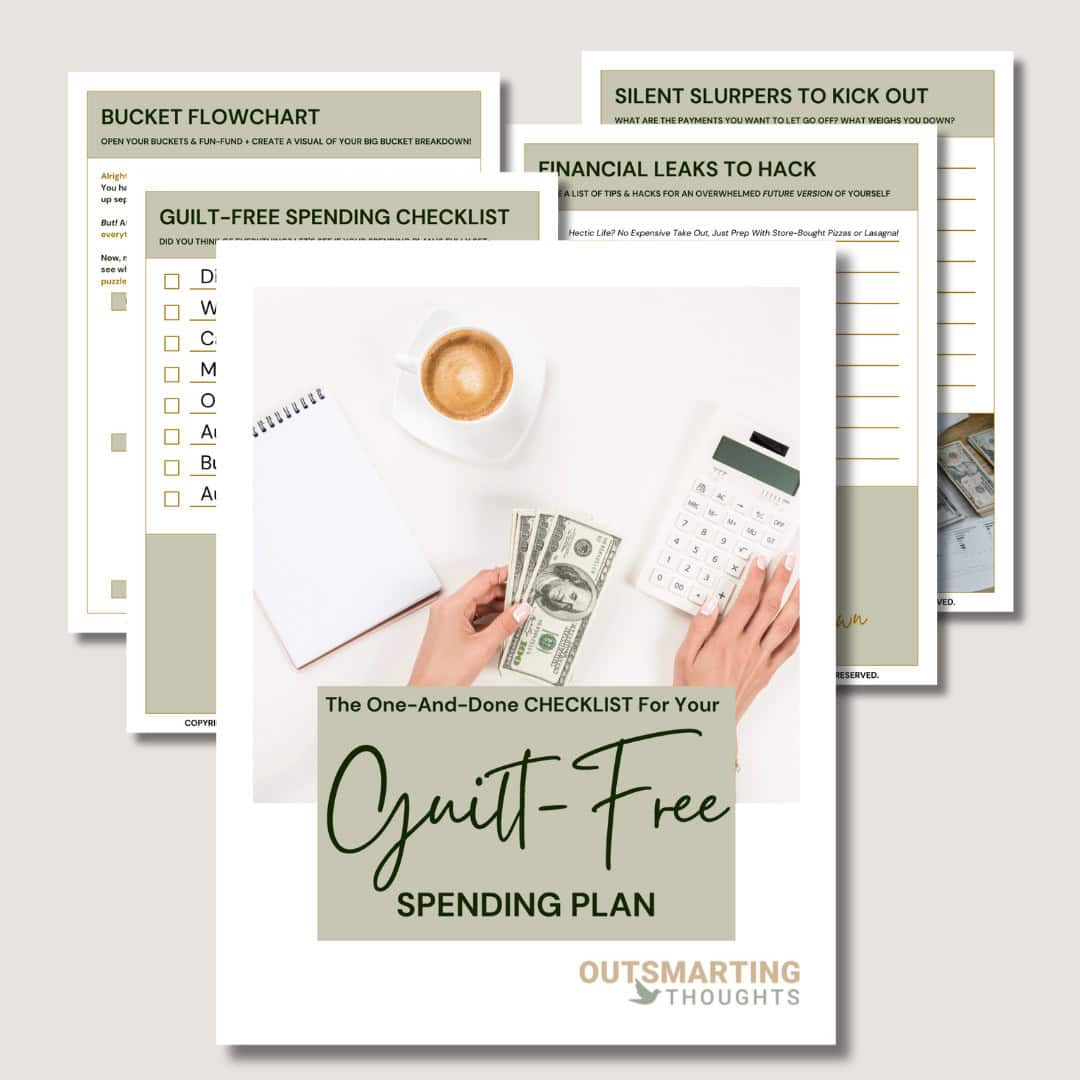
Want a free
ONE-AND-DONE CHECKLIST for aGUILT-FREE SPENDING PLAN? Free up your bandwidth and stop overthinking with this
FREE One-And-Done Checklist for your Guilt-Free Spending Plan!
Simply fill out the form below to get this strategy
delivered straight to your inbox!
Why Shame, Blame, And Guilt Keep You Stuck
Here’s the part that almost nobody tells you: shame doesn’t solve addiction, it strengthens it. When you beat yourself up for overspending, you’re fueling the very cycle you want to break. Blame and guilt don’t inspire discipline; they inspire secrecy, denial, and even more misaligned spending.
Financial denial plays a huge role here. You make a purchase, feel guilty, then avoid looking at your bank account. The problem isn’t the single purchase; it’s the spiral of self-judgment that follows. You confuse a misstep with an identity. You go from ‘I bought something I didn’t need’ to ‘I’m bad with money.’ That identity sticks, and suddenly your brain is wired to repeat the same actions because, deep down, you already labeled yourself.
RELATED POST:
How To Pull Yourself Out Of Financial Denial: An Overachiever’s Strategy To Get Back In Control
And let me tell ya, guilt is the most expensive emotional baggage you can carry. It’s heavy, it slows you down, and it has zero payoff. If you truly want to overcome shopping addiction, you have to cut the shame cord. You have to see overspending for what it is: misaligned action, not moral failure.
What this does is open up space for strategy. Once guilt is out of the way, you can look at triggers without flinching, track your behavior without spiraling, and make rational decisions about money. Kicking shame out of the driver’s seat gives you back control.
Strategic Steps To Outsmart Shopping Addiction
Now that you’ve separated yourself from the shame spiral, it’s time to get practical. Shopping addiction isn’t about lack of willpower, it’s about lack of systems that work with your mind instead of against it.
Start by designing your environment. Unsubscribe from store emails, delete shopping apps, and remove stored credit card info from websites. These aren’t small hacks—they’re the armor that protects you from being hijacked in moments of weakness. The less temptation that reaches you, the less reactive you’ll be.
Next, identify your triggers. Catch yourself in the moment, or, if it already happened, try to psychoanalyze your own behavior. What was it REALLY about? Is it boredom? Stress? Loneliness? Each trigger can be redirected into a different action. If boredom makes you scroll, replace that scroll with a dopamine dose that actually builds your life; like starting a creative project or getting a workout in. If stress makes you spend, set up rituals that calm you without draining your bank account.
Finally, shift your goals from buying to building. Instead of chasing the rush of purchases, chase the satisfaction of aligning your money with things that resonate & align with you. Create milestones, celebrate progress, and treat yourself strategically instead of impulsively.
Excuse me being frank, but wishful thinking isn’t a plan. Systems are. Once you set these up, relapse becomes harder than success. That’s how you outsmart consumer culture at its own game.
How To Overcome Shopping Addiction (Summary)
The psychology behind how to overcome shopping addiction is about rejecting the false belief that you’re broken. It’s about recognizing that consumer culture is engineered to trip you up and that overspending is misaligned action; not proof of moral failure.
The key tools and strategies are clear: remove blame, cut shame, and design an environment that protects you. Pair that with redirecting your triggers into healthy alternatives, and you create a system where relapse is harder than success.
Imagine living free from the dopamine hijack; where shopping is a conscious choice, not a compulsion. You’d not only protect your bank account but also feel the kick-ass confidence of finally being aligned with your goals.
I wish you the absolute best in breaking free from this cycle. Consider this your gentle push in the back, mixed with a girlfriend hyping you up to go kick some serious ass. For what it’s worth, I believe in you! You’ve got this.
This post is all about how to overcome shopping addiction, so you can reclaim control and rise into your full potential.
We aim to help you out as much as possible, but please keep in mind that the content is only for general informational and educational purposes. We offer our services based on independent research and life-experience only, and so our strategies can never serve as a substitute for professional advice. Trust me, we do not have 'everything figured out', are all still huge works in progress, but hey, what works for us, might work for you too! This is allll up for you to decide... It might not work for you, and that's okay, so cherrypick the stuff that resonates and leave the stuff that doesn't, and let's go!