
Wanna know what is impulse buying and why you keep getting blamed for it, like you’ve got some fatal character flaw? This post is dedicated to blowing the lid off the entire narrative and proving that impulse buying isn’t about being weak; it’s about being strategically trapped by a world that profits from your slips.

You’ve probably felt it: that sinking guilt after another late-night scroll, package at your door, or bank account dip. You tell yourself you should’ve had more self-control. But let’s not sugarcoat it: the system you’re in has been engineered to keep you hooked. Overachievers and overthinkers like you? You’re especially vulnerable, because your mind runs at a million miles an hour, and marketing knows exactly how to hijack that energy.
What you’re going to learn is how impulse buying got scapegoated like smoking once was, why you’re not to blame, and what you can actually do to break free without turning into a minimalist monk. You’ll see the dirty industry tactics for what they are and reclaim your sanity with strategies that actually work.
After you have learned to restore your innocence and set up systems that work for you, you’ll stop being the easy target. Instead, you’ll move through the world more clear-headed, less triggered, and with a sense of kick-ass confidence that comes from actually being aligned with your values.
This post is all about the answer to what is impulse buying & how it compares to the tobacco industry, so you can rebel against a system that profits off keeping you hooked.
What Is Impulse Buying
The question, what is impulse buying, runs deeper than just buying something you don’t need. It’s the perfect storm of temptation, shame, and blame. Marketers normalize overspending everywhere you turn, then pivot and call you the problem when you give in. And that’s the precise trap we’re going to call out today. Making you believe that doing something bad equals being a bad person. The guilt spiral that follows only makes the habit worse.
What it truly is about is restoring your innocence. Because. You’re not broken. You’re a normal, decent, feeling human being reacting in a consumer environment that was never designed to help you win. Once you shift the lens, you can stop scapegoating yourself and actually focus on the deeper reasons behind your habits. With the right environment, goals, and tools in place, leveling up out of impulse buying becomes less about willpower and more about strategy.
Impulse Buying Is a Rigged Game
Impulse buying didn’t just pop up because humans are weak; it exists because the system makes it profitable to keep you tripping. Think about tobacco in the 60s: billboards glamorized smoking, actors puffed away on screen, and doctors were paid to say it was safe. Then, decades later, the same industry turned around and framed smokers as the problem. Sound familiar?
Consumer culture is doing the exact same thing with your money. Every scroll, every ad, every push notification is strategically crafted to hijack your brain’s reward system. The dopamine rush of add to cart is no accident; it’s neuroscience turned into profit. And when you fall for it? You get labeled as irresponsible, reckless, or addicted. The industry normalizes spending, then scapegoats the very people it traps.
RELATED POST:
Impulse Buying: Why Your Shame Spiral Is the Real Enemy (And You Should CARE, Instead Of PUNISH)
Let’s not sugarcoat it: impulse buying is less about your lack of self-control and more about being cornered in an environment designed to strip you of it. You’re swimming in a pool of temptation without being taught how to swim. No one hands you tools in school, no one trains you in financial literacy, and yet you’re blamed when the billion-dollar machine wins.
Once you see the setup, you can start to rebel; not against yourself, but against the manipulation. That’s when you stop being the pawn and start playing your own game.
The Tobacco-Level Deception Behind Consumer Culture
If you want to understand what is impulse buying, pause & analyze the situation: it’s not just random weakness, it’s an industry-level strategy. Just like tobacco companies hooked entire generations before finally flipping the blame, modern marketing is pulling the same stunt with your wallet.
Contrary to popular belief, you weren’t born a shopaholic. You were trained into it. Social media algorithms, influencer sponsorships, limited-time offers; all of it is carefully engineered to keep you in a loop. Then, once you’re hooked, the same industry has the audacity to say you lack discipline.
Excuse me being frank, but I absolutely resent wishful thinking; and this is, wishful thinking! Expecting you to resist an army of psychological tactics without ever teaching you how is a setup. This deception is the backbone of consumer culture. And the only way out is to stop buying into their narrative about you being broken and start recognizing how deliberately you’ve been played.
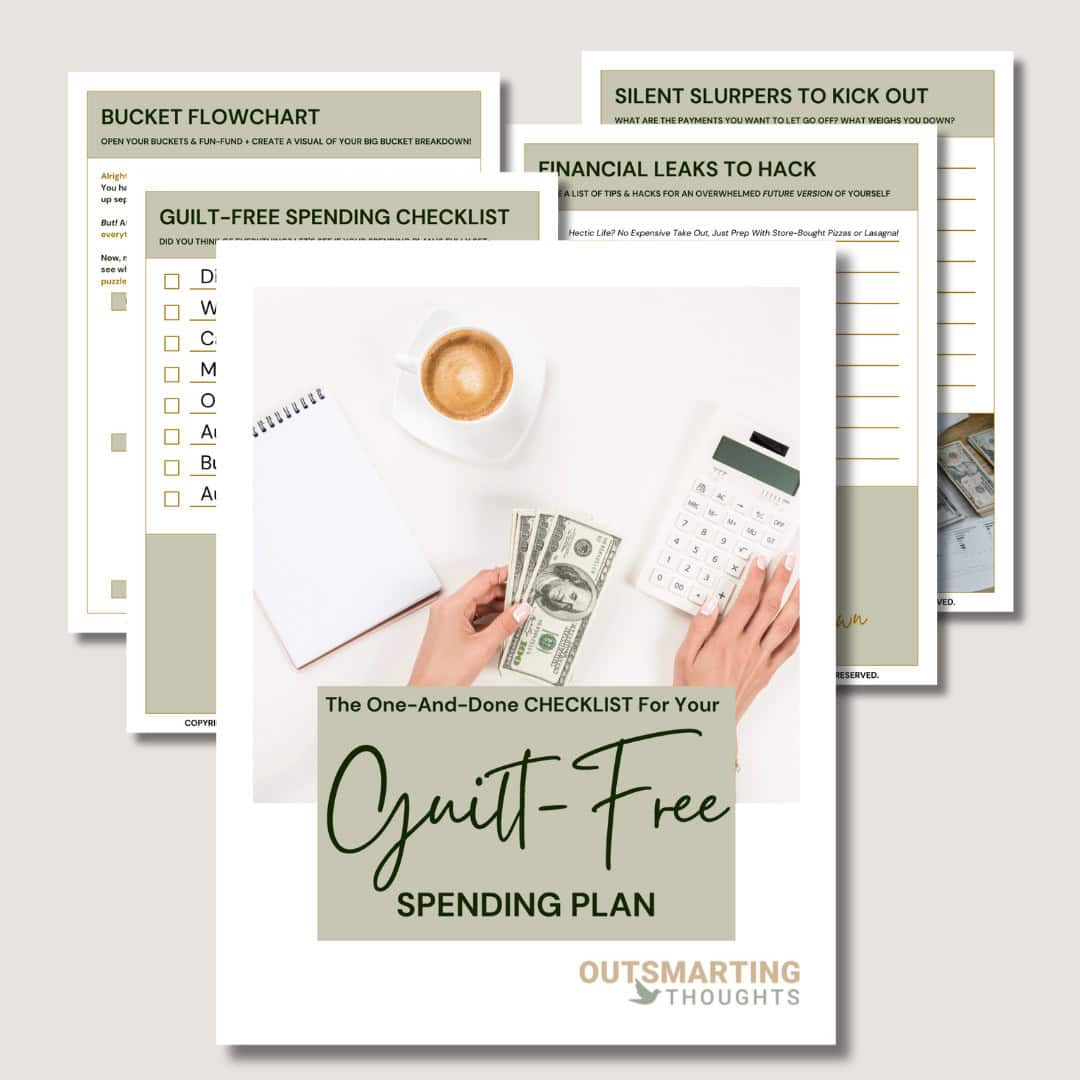
Owning a cashflow strategy is a skill that’ll give you some serious advantages in life. I think budgeting is an aligned action with taking life seriously, and I seriously believe life will reward you for it. If you’re not into high-maintenance strategies like ‘tracking your spending’ and just want to sit down ONCE to direct your financial future, our Guilt-Free Spending Plan Printable is the right cashflow strategy for you! Don’t let anybody outsmart you out of your own money and start budgeting today by simply filling out the form below:
Want a free
ONE-AND-DONE CHECKLIST for aGUILT-FREE SPENDING PLAN? Free up your bandwidth and stop overthinking with this
FREE One-And-Done Checklist for your Guilt-Free Spending Plan!
Simply fill out the form below to get this strategy
delivered straight to your inbox!
Why Self-Blame Is the Real Addiction
Here’s the invisible truth about impulse buying: the shopping itself isn’t the addiction, the self-blame afterward is. Marketers know guilt sells. Just like smokers who were told they were dirty or weak, impulse buyers are pushed into believing they’re defective. But what it truly is about is understanding that shame keeps you in the loop longer than the purchase ever could.
When you confuse doing something bad with being bad, you create a self-doubt roundabout that keeps spinning. You punish yourself mentally, then you soothe the pain with (you guessed it) another purchase. The cycle isn’t about the shoes, the gadgets, or the takeout; it’s about the dopamine hit that temporarily distracts you from the shame.
RELATED POST:
How to Avoid Impulse Buying When You’ve Been Told It’s Just a “Willpower Problem”
Pause & analyze the situation: beating yourself up isn’t noble, it’s playing right into their marketing strategy. Shame slows you down, drains your energy, and convinces you you’re powerless. But you’re not powerless. You need to redirect your fire. Once you reclaim your innocence and see yourself as a normal, decent, feeling human being in a hostile consumer jungle, you start to fight the actual enemy instead of yourself.
And let me tell ya, once you stop scapegoating yourself, the so-called addiction loses half its power. That’s not weakness, that’s strategy.
How To Rebel & Reclaim Your Power
What is impulse buying if not a rigged trap you can outsmart? The rebellion starts with refusing to accept guilt as your identity. You’re not doomed. And you’re not weak. You’re an overachiever stuck in a culture designed to exploit your ambition and boredom. The only way out is to stop half-assing your life and start building systems that protect your energy.
The real rebellion isn’t about cutting up your credit card. It’s about building an environment where you can thrive. That means creating goals that excite you, setting healthy boundaries with your money, and using strategies that make temptation less of a constant battle. Tools like budgeting dashboards, calendar-based planning, and accountability systems aren’t about restriction; they’re about self-control & liberation. They’re the hacks that let you enjoy life without spiraling every time you scroll.
Counterintuitively, the more structure you build, the freer you feel. Freedom isn’t the absence of boundaries; it’s creating boundaries that align with the life you actually want. The moment you stop chasing dopamine crumbs and start dopamine dosing strategically, you take your power back.
You deserve to self-actualize, to live big, and to refuse the tiny box marketing tries to trap you in. That’s the rebellion: choosing strategy over shame.
What Is Impulse Buying (Summary)
The psychology behind what is impulse buying isn’t about weakness; it’s about a culture that profits from normalizing overspending, then scapegoating you for reacting like any human would. It’s the tobacco playbook all over again: hook you, then shame you.
The strategies you’ve learned here aren’t about punishing yourself; they’re about reclaiming your innocence, setting up systems that protect your energy, and redirecting your fire where it actually matters. That means using structure, goals, and strategies not as cages but as weapons of freedom.
Visualize a future where you move through life less triggered, more clear-headed, and fully aligned with what resonates with you. Where your energy goes into growth, not guilt. Where your ambition fuels your life, not the next marketing trap. Because YOU CAN!
I wish you the absolute best in rebelling against the system, taking your power back, and building the life you refuse to half-ass. Now go kick some ass.
This post is all about the answer to what is impulse buying & how it compares to the tobacco industry, so you can rebel against a system that profits off keeping you hooked.
We aim to help you out as much as possible, but please keep in mind that the content is only for general informational and educational purposes. We offer our services based on independent research and life-experience only, and so our strategies can never serve as a substitute for professional advice. Trust me, we do not have 'everything figured out', are all still huge works in progress, but hey, what works for us, might work for you too! This is allll up for you to decide... It might not work for you, and that's okay, so cherrypick the stuff that resonates and leave the stuff that doesn't, and let's go!