
Wanna know why compulsive buying disorder feels like a black hole sucking your bank account? This post is dedicated to showing you it’s not about the stuff; it’s about the dopamine hit your brain is chasing.

Let’s not sugarcoat it: compulsive buying disorder leaves you exhausted, broke, and ashamed. You promise yourself you’ll stop, only to get caught in the same loop again. The guilt eats at you, and you start to believe you are the problem. Sound familiar? You’re not alone; overachievers often confuse doing something bad with being bad, and the self-judgment only fuels the cycle.
What you’re going to learn is how compulsive buying disorder is way more about unmet needs than shopping bags. You’ll see why the culture around you practically begs you to trip, how guilt makes the problem worse, and how to flip the script so you can actually move forward.
After you have learned to decode the real need behind every urge, you’ll be able to step out of the guilt spiral, design better strategies, and finally feel in control again. That means more kick-ass confidence, better alignment with what really matters to you, and a refusal to half-ass life just because consumer culture says so.
This post is all about compulsive buying disorder, so you can stop blaming yourself and start breaking free.
Compulsive Buying Disorder
Compulsive buying disorder is about way more than just reckless shopping. When you observe the pattern more deeply, it’s way more about unmet needs and dopamine wiring than bad habits. The problem isn’t that you’re weak, greedy, or shallow; it’s that you live in a consumer culture engineered to hijack your brain. Triggers are everywhere, and when stress or self-doubt roundabouts pile up, swiping the card becomes the quick fix.
But here’s the catch: guilt and shame make it worse. You start scapegoating yourself as the problem, ignoring the fact that you’re a normal, decent, feeling human being trapped in an environment designed for overspending. Once you realize the real fight isn’t with shopping bags but with unmet needs and shame spirals, you’re free to design strategies that give you the dopamine without the debt. That’s how you shift from self-judgment to self-actualization.
Stop Beating Yourself Up Over Shopping Bags
Compulsive buying disorder is a vicious cycle, but let’s move past fluff & flaky wishful thinking: it’s not your moral failure. Contrary to popular belief, compulsive buying is not about you being reckless, shallow, or greedy; it’s about your brain chasing a dopamine rush. When life feels overwhelming, shopping becomes a relief strategy to silence the emotional turmoil within you, even if it’s just for a second. And while the relief is real, the shame that follows makes you spiral harder.
What I would like you to consider is that shame is gasoline on this fire. Overspending is a misaligned action, not evidence of a broken person. Consumer culture is set up to make you trip at every corner, yet you’re the one blaming yourself for not having monk-like self-control.
RELATED POST:
Impulse Buying: Why Your Shame Spiral Is the Real Enemy (And You Should CARE, Instead Of PUNISH)
If you pause & analyze the situation, compulsive buying disorder looks less like weakness and more like a poorly translated message from your inner world. Shopping is your brain’s shortcut strategy to meet needs it doesn’t know how to name. Instead of scapegoating yourself, the real work is to figure out what need you were trying to meet when you swiped. Once you recognize that, the shame loses power, and you finally stop confusing being bad with doing something bad.
The Communication Breakdown With Yourself
When you’re caught in compulsive buying disorder, the issue isn’t the handbag, the sneakers, or the shiny new gadget. The deeper issue is that you’re using stuff to speak the language of needs without realizing it. Marshall Rosenberg nailed it: all behavior is a strategy to meet unmet needs. Buying becomes the language you default to when your needs for calm, joy, or belonging are ignored.
In fact, every compulsive purchase is just your nervous system trying to communicate: ‘I’m depleted. I need something.’ But instead of pausing to decode the message, you swipe and silence yourself with another box on the doorstep. That’s the communication breakdown; your real needs stay buried under cardboard and bubble wrap.
When you confuse the strategy (buying) with the need (comfort, security, excitement), you stay trapped. The moment you separate the two, you reclaim your power. And once you can name the actual need, you’re free to design a better way to meet it.
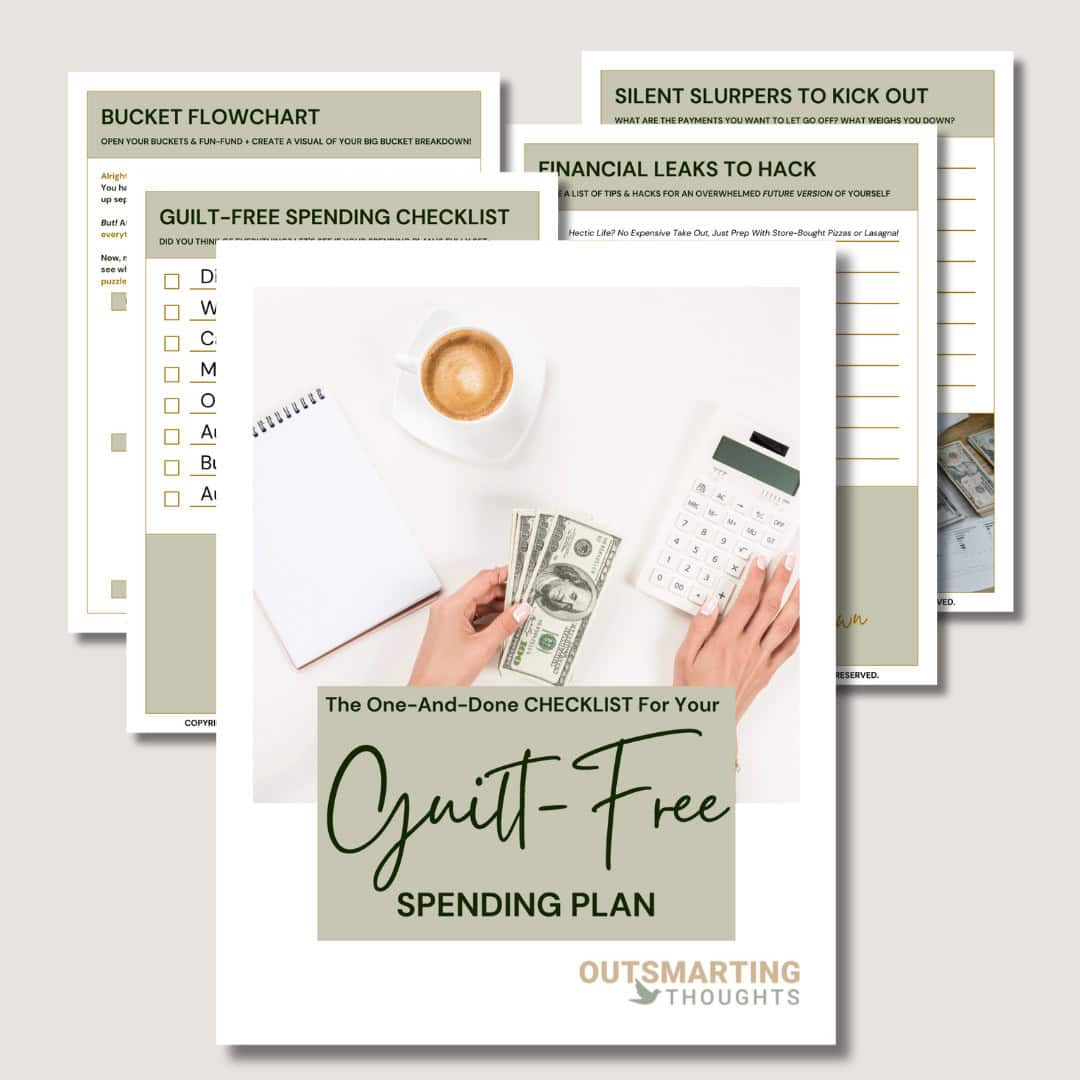
Owning a cashflow strategy is a skill that’ll give you some serious advantages in life. I think budgeting is an aligned action with taking life seriously, and I seriously believe life will reward you for it. If you’re not into high-maintenance strategies like ‘tracking your spending’ and just want to sit down ONCE to direct your financial future, our Guilt-Free Spending Plan Printable is the right cashflow strategy for you! Don’t let anybody outsmart you out of your own money and start budgeting today by simply filling out the form below:
Want a free
ONE-AND-DONE CHECKLIST for aGUILT-FREE SPENDING PLAN? Free up your bandwidth and stop overthinking with this
FREE One-And-Done Checklist for your Guilt-Free Spending Plan!
Simply fill out the form below to get this strategy
delivered straight to your inbox!
Find The Need Behind The Swipe
What you’re really after in compulsive buying disorder is not the stuff; it’s the dopamine release attached to the purchase. When you observe the pattern more deeply, you’ll see that every urge hides a need underneath it. Maybe it’s the need for calm after a stressful week. Maybe it’s the need for belonging when you feel left out. Or maybe it’s just the need for play when your life feels like one endless to-do list.
The problem is that you don’t pause long enough to explore and name that need. The swipe happens faster than thought. And let me tell ya, if you can’t name the need, you’ll never find a better strategy to meet it. That’s why guilt doesn’t help; it drowns out your inner voice even further.
RELATED POST:
How to Avoid Impulse Buying When You’ve Been Told It’s Just a “Willpower Problem”
Instead, before hitting checkout, stop for one breath and ask yourself: ‘What need am I trying to meet right now?’ It sounds simple, but this question interrupts the autopilot. For me personally, a lot of my past overspending & impulse buying had to do with boredom and being dissatisfied with my life. Once I knew this was the driving need, I could find alternatives to make life feel less plain in other ways than just shopping away.
You will start seeing the bigger picture: buying is a strategy, not a solution. Once you pinpoint the need, you can decide whether shopping is the best way to meet it; or whether a different dopamine dose (rewarding yourself strategically, connecting with someone, or resting) is a better fit.
Shift From Stuff To Strategies That Work
If compulsive buying disorder is really about unmet needs, then the cure isn’t shame, but strategy. Shopping has become your default strategy because it works fast, but it works like a bandaid, instead of like medicine. What if you gave yourself permission to keep the dopamine hit but in ways that actually build your life instead of draining it? That’s where you rebel against staying small.
Counterintuitively, the fix isn’t about never indulging again; instead, it’s about indulging strategically. Instead of random impulse buys, you can dopamine dose through planned rewards, social connection, or creative outlets. The point is not to cut yourself off from pleasure, but to align the pleasure with what truly fuels you. Sorry for not sugarcoating, but you cannot outmuscle consumer culture by sheer pride. You need systems. Budget dashboards, guilt-free spending plans, or even just an intentional Google Sheet open daily, that put you back in the driver’s seat.
What it truly is about is reclaiming choice. Once you shift your focus from stuff to strategies, the guilt cycle breaks. You stop confusing a shopping cart with self-worth and start building the kind of life that actually excites you. That’s how you move from reactive buyer to intentional strategist of your own dopamine hits.
Compulsive Buying Disorder (Summary)
Compulsive buying disorder is way more about unmet needs than about reckless shopping. In a culture designed to tempt you, it’s easy to scapegoat yourself as the problem. But compulsive buying is a misaligned action, not a reflection of your worth. Once you restore your innocence and recognize that guilt only deepens the spiral, the way out becomes clear.
The key is learning to separate the need from the strategy. By pausing to identify what you actually crave; calm, joy, belonging, you can design healthier ways to meet it. Tools like intentional spending plans, dopamine dosing, and budgeting dashboards help you trade shame for strategy and put you back in control.
Imagine living with kick-ass confidence, knowing you can still enjoy dopamine hits but in ways that build your life instead of draining it. Picture yourself excited about your own alignment, free from the constant guilt spiral.
I wish you the absolute best as you stop playing small, reclaim your power, and start building the bold, full life you deserve.
This post was all about compulsive buying disorder, so you can stop blaming yourself and start breaking free.
We aim to help you out as much as possible, but please keep in mind that the content is only for general informational and educational purposes. We offer our services based on independent research and life-experience only, and so our strategies can never serve as a substitute for professional advice. Trust me, we do not have 'everything figured out', are all still huge works in progress, but hey, what works for us, might work for you too! This is allll up for you to decide... It might not work for you, and that's okay, so cherrypick the stuff that resonates and leave the stuff that doesn't, and let's go!