
Wanna know why online shopping addiction gets treated like a moral failure instead of what it actually is; a coping mechanism for unmet needs? This post is dedicated to exposing the scapegoating, unpacking the psychology behind it, and giving you the redemption path no one else seems to show.

Recognize this? You’ve probably beaten yourself up for clicking ‘buy now’ again. Shame floods in, your cart empties, but your bank account doesn’t. The guilt grows heavier, and instead of freedom, you feel trapped. And if you’re like most overachievers, you secretly believe you should have had the self-discipline to fix this ages ago.
What you’re going to learn is that addiction is not about weakness or bad morals, but about misaligned behavior driven by unmet needs. You’ll see why blaming yourself only keeps you stuck, and why the actual way out is identity-shifting and strategic financial clarity.
After you have learned to stop identifying with your online shopping addiction, care for your so-called ‘bad behavior,’ and align your spending with what excites you, you’ll feel more empowered, in control, and deeply aligned with who you want to become. Your finances will no longer sabotage you; they’ll fuel the life you actually crave.
This post is all about online shopping addiction, so you can finally redeem yourself without shame and start living like you refuse to half-ass life.
Online Shopping Addiction
Online shopping addiction isn’t about being a ‘bad person.’ When you observe the pattern more deeply, it’s about living in a consumer culture designed to tempt you everywhere you look. Instead of realizing that overspending is reactive, you internalize it as a personal flaw. That’s why you punish yourself when what you really need is understanding.
The truth is, you confuse being bad with doing something bad. Overspending and impulse buying are simply misaligned actions. Shame, guilt, and blame only delay progress. If you restore your innocence and give yourself the belief that you can set up the right environment, strategy, and goals, the impulsivity starts to lose its power.
Addiction Is Not A Moral Failure, It’s A Misunderstood Coping Mechanism
Society loves to point fingers at online shopping addiction as if it’s some kind of moral weakness. But what it truly is about is unmet needs. Addictive behavior is rarely about the object; whether it’s shoes, gadgets, or makeup. It’s the emotional band-aid that covers deeper wounds. Every addict, at some level, wants freedom. Yet there’s always a part that hijacks their behavior, dragging them back into the loop. That part isn’t evil; it’s more like a scared child clinging to safety, desperate to be heard.
RELATED POST:
Impulse Buying: Why Your Shame Spiral Is the Real Enemy (And You Should CARE, Instead Of PUNISH)
When you treat that inner voice as a monster, you only intensify the cycle. But when you pause & analyze the situation, it becomes clear: unmet needs are driving the craving. Psychology shows addictive behaviors thrive in environments where basic needs like safety, self-expression, or belonging aren’t fully met. Instead of labeling yourself as defective, try recognizing that your ‘bad habit’ is actually a signal; a red flag pointing you toward what’s missing in your life.
Let’s move past fluff & flaky wishful thinking: shame does not cure addiction. But self-judgment definitely digs the pit deeper. What redeems you is not punishment but understanding and care. Once you see your addiction as misdirected care for your own unmet needs, you can start to redirect that energy into building a life that actually satisfies those needs long-term.
Redemption Starts With Identity And Clarity
If you take away one thing from this post, let it be this: identity drives behavior. If you keep calling yourself an online shopping addict, you’ll live like one. Redemption begins the moment you stop identifying with the problem. You’re not your habit; you’re a normal, decent, feeling human being who’s stuck in a pattern. Big difference.
What you would like to consider is that the way out starts with clear-headed rationality about what excites you. Instead of spending blindly, create a bucket list. Write down what experiences you actually crave, then price them out. That gives your brain a roadmap of desires that are real; not a fake dopamine hit from another delivery box.
From there, the next move is building a cashflow strategy that fits your personality. Neurotic control freaks like me thrive with detailed spreadsheets. But less control-based characters? They need a one-and-done system that auto-runs without constant attention. Align your financial setup with your natural quirks instead of fighting them. Once you align money with who you are, the urge to self-sabotage shrinks. The more you know where your money is going, the less it controls you.
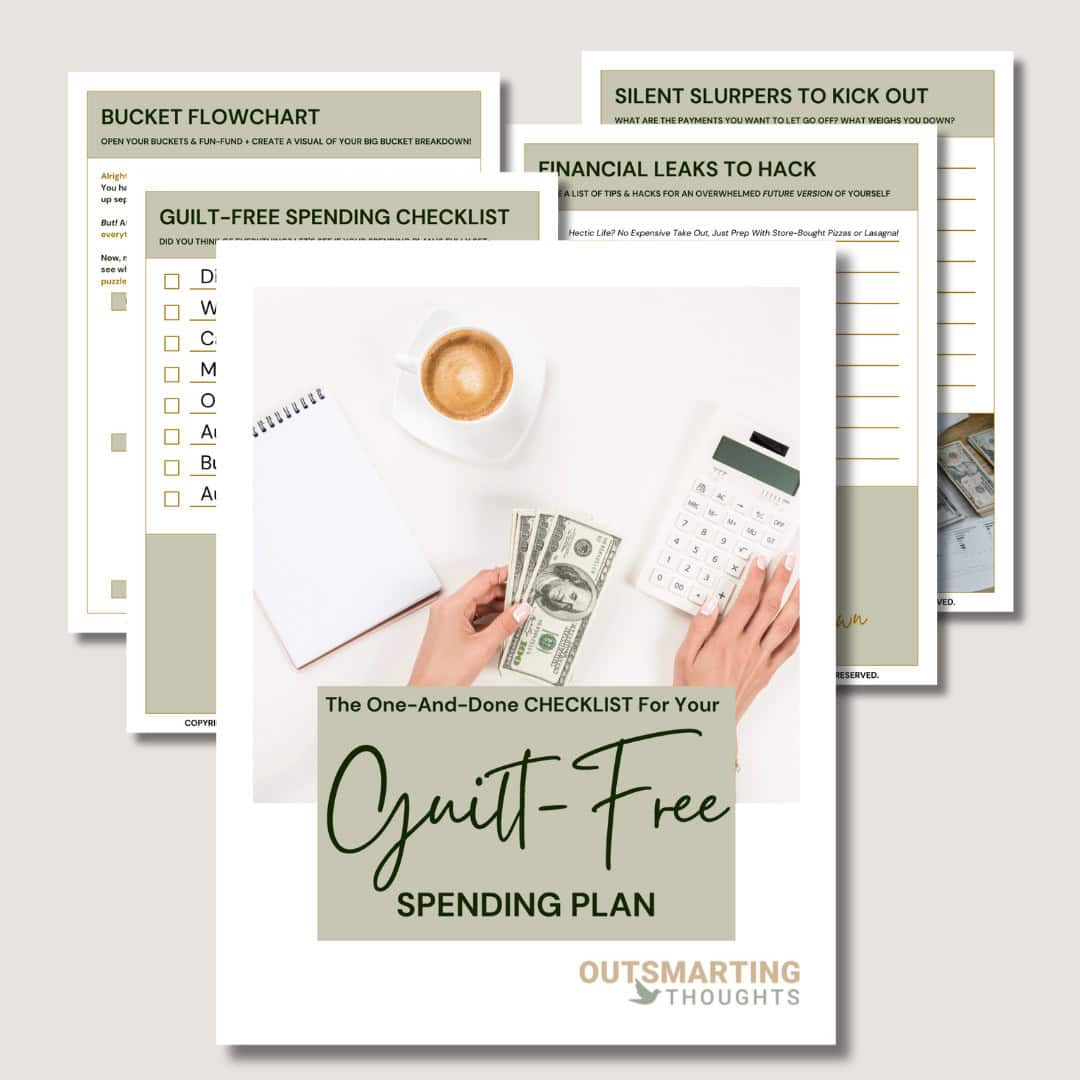
Owning a cashflow strategy is a skill that’ll give you some serious advantages in life. I think budgeting is an aligned action with taking life seriously, and I seriously believe life will reward you for it. If you’re not into high-maintenance strategies like ‘tracking your spending’ and just want to sit down ONCE to direct your financial future, our Guilt-Free Spending Plan Printable is the right cashflow strategy for you! Don’t let anybody outsmart you out of your own money and start budgeting today by simply filling out the form below:
Want a free
ONE-AND-DONE CHECKLIST for aGUILT-FREE SPENDING PLAN? Free up your bandwidth and stop overthinking with this
FREE One-And-Done Checklist for your Guilt-Free Spending Plan!
Simply fill out the form below to get this strategy
delivered straight to your inbox!
Why You Shouldn’t PUNISH, But Act With CARE
I don’t understand why this knowledge isn’t more out there. But seriously. Punishing yourself for slipping only sabotages your brain further. Neuroscience shows self-blame overloads your stress response (aka, back into fight-or-flight) and weakens your prefrontal cortex; the exact part you need for rational decisions. When you go full drill sergeant on yourself, you fry the system you rely on to keep promises to yourself.
RELATED POST:
How to Avoid Impulse Buying When You’ve Been Told It’s Just a “Willpower Problem”
Caring, on the other hand, rewires the whole process. It puts the prefrontal cortex ‘back online’ so you actually have the capacity to think rationally again. When you treat your overspending like a misaligned action instead of proof you’re ‘hopeless,’ you calm down the inner chaos. That’s when you can actually choose differently. The rebel move isn’t punishing your so-called failures; it’s compassion & curious understanding that makes you stronger.
Every time you swap guilt for curiosity, you weaken the grip of the old habit. That’s how you break the loop: not by beating yourself down, but by lifting yourself up. And let me tell ya, that shift isn’t soft; it’s one of the most powerful reprogramming strategies you’ll ever use.
The Real Exit Strategy: Meeting Your Needs & Protecting Your Energy
If you want to outsmart online shopping addiction, you’ve got to stop treating it like the enemy and start treating your unmet needs like honored guests. That doesn’t mean letting your habits run wild; it means decoding what you were actually craving in the first place. Maybe it’s variety, maybe it’s belonging, maybe it’s a spark of excitement in a life that feels too plain. The more you face those needs, the less shopping has power over you.
Counterintuitively, the way to break free isn’t doubling down on willpower, but upgrading your self-care. Real self-care means tending to your emotional world with the same intensity you bring to work or relationships. Think boundaries, rest, creativity, and meaningful goals. That’s where freedom lives. When your inner world feels nourished, you don’t need quick dopamine fixes. You already feel full. It’s the excitement that you needed after all.
So the way forward isn’t about restriction. It’s about designing a life that excites you so much, impulse buying feels boring compared to the real thing. That’s not wishful thinking; it’s strategy.
Online Shopping Addiction (Summary)
Online shopping addiction isn’t about being ‘bad.’ It’s about living in a consumer culture designed to trip you up and then blaming yourself for reacting. When you confuse being bad with doing something bad, shame grows and progress stalls. But once you see your behavior as a misaligned coping mechanism, you can restore your innocence and start fresh.
The tools that make a difference are clear: stop identifying with your addiction, create financial clarity that aligns with your personality, and care for yourself instead of punishing. Once you layer in emotional self-care and meet the needs that were driving the habit, you weaken the addiction at its root.
Picture yourself spending only on what resonates & aligns with you; bucket list trips, bold dreams, and investments that actually excite you. Your finances finally fuel your life instead of sabotaging it. That’s the version of you that refuses to half-ass life.
I wish you the absolute best. Now go out there and rebel against staying small. Kick some ass, design a life you love, and don’t let mass marketing masterminds write your story for you. You got this!
This post was all about online shopping addiction, so you can finally redeem yourself without shame and start living like you refuse to half-ass life.
We aim to help you out as much as possible, but please keep in mind that the content is only for general informational and educational purposes. We offer our services based on independent research and life-experience only, and so our strategies can never serve as a substitute for professional advice. Trust me, we do not have 'everything figured out', are all still huge works in progress, but hey, what works for us, might work for you too! This is allll up for you to decide... It might not work for you, and that's okay, so cherrypick the stuff that resonates and leave the stuff that doesn't, and let's go!