

Wanna know why the label shopaholic keeps you stuck even when you’re trying to cut back? This post is dedicated to ripping off that sticky label and replacing it with a practical identity shift you can actually live with.

You hate how fast your cart fills up, how sneaky the “Buy Now” button feels, and how your bank app looks like a horror film. You promise yourself you’ll do better, then sales pop up, stress hits, and boom. The cycle restarts. Painful, I know. As overachievers, you demand excellence, yet money problems trigger a huge self‑doubt roundabout that brings you out of balance, every time.
What you’re going to learn is how identity drives behavior, how your subconscious protects the status quo, and how small, believable steps retrain your brain to choose differently. You’ll learn a rebel‑friendly system to move from impulse to intent without having to turn your life into a spreadsheet dungeon.
After you have learned to stop identifying with the problem and start identifying with who you’re becoming, you will be able to pause mid‑urge, redirect your energy, and spend on things that resonate & align with you. You’ll feel more in control, more grounded, and equipped with clear‑headed rationality. Better still, you’ll start trusting yourself again.
This post is all about the word shopaholic, and why refusing the label helps you build a stronger money identity so you can actually change.
Shopaholic
If you’re a shopaholic, chances are, you blame yourself fully for your behavior. But this one is also true: Consumer culture is engineered to trip you. Algorithms study your weak moments. Scarcity countdowns bait your nervous system. But you scapegoat yourself as the entire problem. That’s not fair. It’s not all your fault.
Contrary to popular belief, overspending doesn’t mean you’re lacking character. It means your environment is louder than your intentions, and your identity has been glued to the wrong story. You confuse being bad with doing something bad. The act was misaligned. You, however, are a normal, decent, feeling human being, and there is no need to punish yourself so harshly.
What I would like you to consider is this: shame delays progress while curiosity & care accelerate it. When you restore your innocence, believe in your capacity, and design a system that fits how your brain works, behavior change stops feeling like punishment. It becomes precision.
Stop Calling Yourself The Problem
Let’s move past fluff & flaky wishful thinking. When you call yourself a shopaholic, your brain treats overspending like home base. Because! Identity drives action. Action builds evidence. Evidence cements identity. And that loop keeps you buying.
Can I shake you awake a little right now? Labels feel honest, yet they’re lazy. Because you’re NOT your pattern. You’re running a pattern that your subconscious recognizes as normal. It’s identified with it! It rewards familiarity over growth, especially when you’re stressed, bored, or craving relief.
Now, let’s do call out the financial denial. You avoid numbers because facing them feels like a courtroom. You fear the verdict. Denial promises safety, but it costs you progress. Sorry for not sugarcoating, but I always prefer brutal honesty: avoiding the statement doesn’t reduce the damage. It only hides the evidence while the behavior compounds.
RELATED POST:
How To Pull Yourself Out Of Financial Denial: An Overachiever’s Strategy To Get Back In Control
Here’s the shift away from identifying with it. Treat overspending as a misaligned strategy your brain uses to regulate emotion. When you name the function of the behavior, the shame loses power. You stop telling a permanent story and instead, start editing the draft. That’s how you protect your integrity while upgrading your identity. And let me tell ya, once your identity updates to someone who chooses differently under pressure, your choices start matching that story.
Make Change Believable To Your Brain
Excuse me for being frank, but I absolutely resent wishful thinking. Telling yourself you’ll “never impulse buy again” spikes anxiety, and then your brain rebels against it. I do understand, because big declarations feel brave. But unfortunately, they also feel unbelievable. Because. Your subconscious will always reject goals that don’t fit what you believe is actually possible.
Counterintuitively, the fastest way forward is to scale the change to what your nervous system can believe as possible today. Start with doable upgrades. Replace “I’m bad with money” with “I’m practicing a new way to manage money, and that takes some time to get right.” Replace “No more shopping ever” with “My cart can wait 24 hours.” Each small success resets your baseline and shrinks the unconscious override by your old identified default pattern.
In fact, money management doesn’t have to mean tracking every penny in a spreadsheet prison. You need a system that aligns with your personality. If you don’t have bandwidth for a high‑maintenance setup, own that truth. Pick a one‑and‑done framework that supports you instead of fighting you.
Owning a cashflow strategy is a skill that’ll give you some serious advantages in life. I think budgeting is an aligned action with taking life seriously, and I seriously believe life will reward you for it. If you’re not into high-maintenance strategies like ‘tracking your spending’ and just want to sit down ONCE to direct your financial future, our Guilt-Free Spending Plan Printable is the right cashflow strategy for you! Don’t let anybody outsmart you out of your own money and start budgeting today by simply filling out the form below:
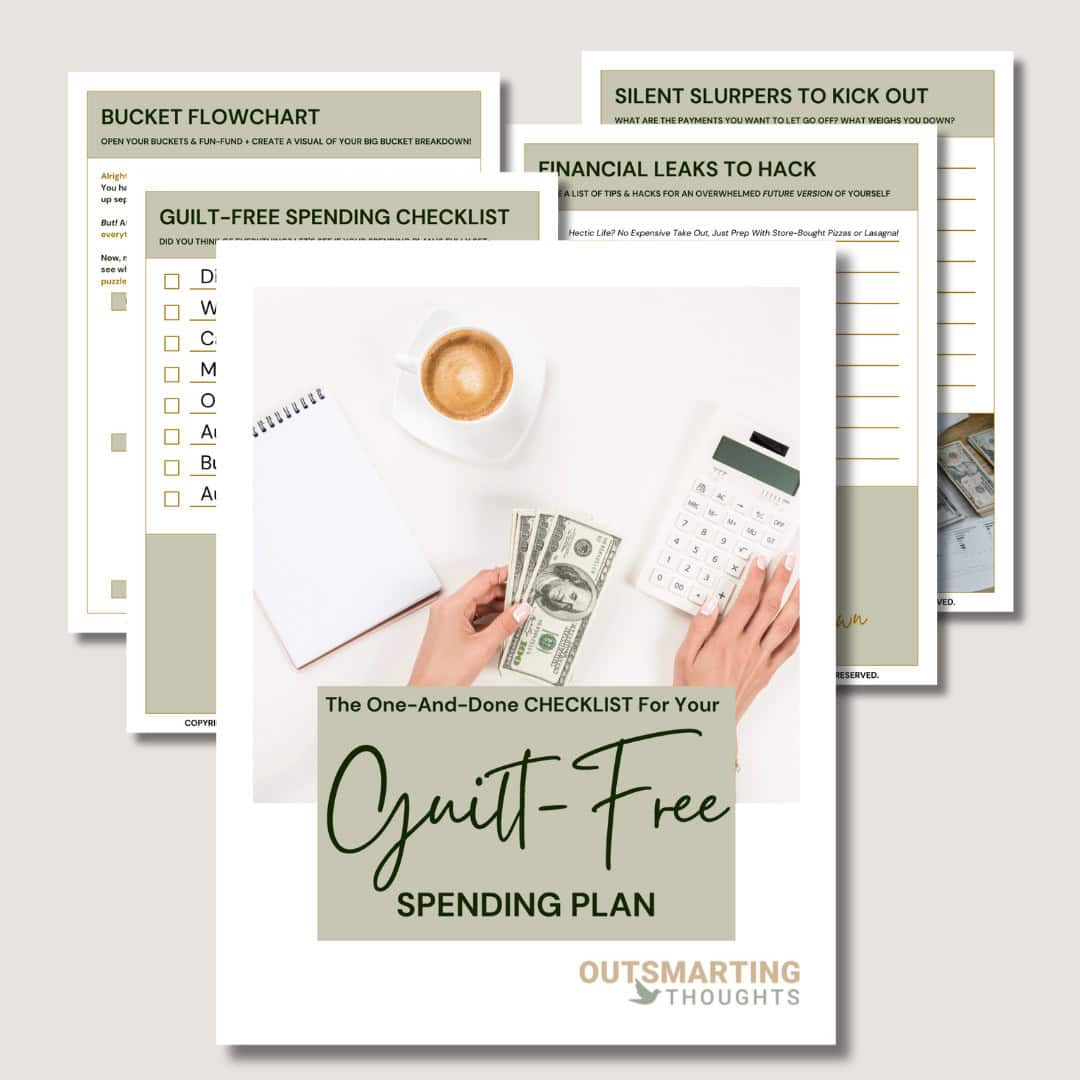
Want a free
ONE-AND-DONE CHECKLIST for aGUILT-FREE SPENDING PLAN? Free up your bandwidth and stop overthinking with this
FREE One-And-Done Checklist for your Guilt-Free Spending Plan!
Simply fill out the form below to get this strategy
delivered straight to your inbox!
Intentional Spending Beats Impulse. Every. Time.
Pause & analyze the situation when it comes up again, and recognize it for what it is; impulse buying is a fast relief strategy to cope with unsettling emotional pain. This can even be about boredom! It numbs stress, provides you with a boost of happiness, and hands you a hit of control for that moment. But intentional spending doesn’t kill joy. In fact, it puts your joy on your side.
Here’s how to build the identity: you’re becoming someone who asks better questions before money leaves your account. Does this purchase solve a real problem or just distract you from one? Will it still matter in two weeks? Does it compete with a goal you deeply want? When you ask, you slow the autopilot and regain choice.
RELATED POST:
Intentional Spending: The CEO-Mindset And AntiDote Against Overspending & Impulse Buying
Intentional spending means aligning cash with your highest‑value priorities. You keep the fun, but you upgrade the rules. You decide your splurge category on purpose, set a spending cap you can live with, and automate protection for your goals. Instead of scrapping spending on what’s fun, you only make sure it doesn’t go at the cost of your adulting life. That way, when the urge hits, the system carries you.
You don’t need monk‑level discipline. You need pre‑decisions. Put the temptations on a 24‑hour runway. Park wish‑list items in a single note. Automate transfers to future‑you first. When that becomes your normal, the word shopaholic stops fitting. Your pride returns because your behavior finally matches the person you already knew you could be.
Care, Not Criticism: Forgive, Rehearse, Repeat
Let’s not fall for wishful thinking again: because you will slip. I know from experience, this is a bitter pill to swallow for us overachievers. But! Progress is repetition, not perfection. Punishment floods your body with alarm and pushes you back into quick‑fix buying. Care calms your actual nervous system so learning has a fair shot to actualy happen.
Psychology backs this up. Self‑compassion improves follow‑through, reduces shame spirals, and supports habit change. It’s because your prefrontal cortex ‘can stay online’, whereas stress turns it off. Shame spikes stress hormones and narrows attention. Your brain starts scanning for escape hatches. Purchases become exits. When you switch to kind, direct self‑talk, your body exits threat mode and reopens the thinking centers you need to choose differently. That’s not fluff. That’s how your nervous system inherently works.
So. Here’s your protocol. First, audit the scene without drama. Try to play a detective or something, whatever works to get you in a rational observer state, instead of the shame spiral. Then investigate. What was the trigger, time, tab, and feeling? Second, try to repair the micro‑damage as much as you can, as soon as you can. Return the item if possible, rebalance the week’s spend, and recommit your next step. Third, rehearse the replacement. Write the exact sentence you will use next time. Then practice it out loud when you’re calm.
Forgive yourself for having to do this over and over. That’s how skill is built. You’re not aiming for a spotless record. You’re building kick‑ass confidence from evidence. You act, assess, adjust. You rebel against staying small, not by punishing yourself, but by choosing your next aligned move.
Shopaholic (Summary)
You blamed yourself for financial turbulence while living inside a marketplace designed to hijack your attention. You confused being bad with doing something misaligned. And that judgment kept you stuck.
Today, you learned to drop the label, face numbers without denial, scale change to your current baseline, and practice intentional spending with pre‑decisions. You also learned why care beats criticism for long‑term behavioral upgrade.
Picture this: you open your bank app and it finally reflects choices that resonate & align with you. Purchases serve a life you actually want. You feel grounded, capable, and proud of the person you’re becoming. It’s possible. And for what it’s worth, I believe in you!
I wish you the absolute best. Consider this your gentle push and loud cheer. Get a system. Get a grip. Get shit done.
This post was all about the word shopaholic, and why refusing the label helps you build a stronger money identity so you can actually change.
We aim to help you out as much as possible, but please keep in mind that the content is only for general informational and educational purposes. We offer our services based on independent research and life-experience only, and so our strategies can never serve as a substitute for professional advice. Trust me, we do not have 'everything figured out', are all still huge works in progress, but hey, what works for us, might work for you too! This is allll up for you to decide... It might not work for you, and that's okay, so cherrypick the stuff that resonates and leave the stuff that doesn't, and let's go!