
Wanna know why shopping addiction keeps creeping back into your life even when you swear you’re done with overspending? This post is dedicated to showing you that your problem is not about a lack of discipline, but about the unmet needs hiding behind your shopping habits.

Shopping addiction doesn’t just drain your bank account. It leaves you feeling powerless, ashamed, and frustrated, like you’re stuck in a cycle you can’t outsmart. And let me tell ya, for overachievers and overthinkers, that feeling of losing control over your own life is brutal. You’re not chasing the handbag, the gadget, or the endless Amazon carts. You’re chasing a dopamine hit to fill the void of boredom and dissatisfaction.
What you’re going to learn is how unmet needs show up as addictive behavior, why punishing yourself only fuels the cycle, and how you can redirect your energy toward actualizing a life you’re excited about. We’ll also talk strategy; because all the pep talks in the world mean nothing if you don’t know how to build a financial setup that actually works for your personality and lifestyle.
After you have learned how to decode your own addictive patterns, you will be able to set up clear-headed rationality around your money, identify the real needs behind your shopping cravings, and create a system that frees you from self-doubt roundabouts. You’ll feel more in control, more aligned, and more unapologetic about building a kick-ass life.
This post is all about shopping addiction, so you can stop half-assing life and finally live it full out.
Shopping Addiction
Shopping addiction isn’t just about overspending. It’s about way more than chasing new stuff. When you observe the pattern more deeply, it’s about escaping boredom, dissatisfaction, and unmet emotional needs. And sorry for not sugarcoating, but we live in a consumer culture that wants you to feel empty so you keep buying.
The trap is this: you confuse doing something bad with being bad. That shame only makes you spiral harder. When you stop scapegoating yourself and start seeing the environment and your unmet needs as the true triggers, you can take back your power. Rebelling against shopping addiction is not about being frugal or perfect. It’s about refusing to let mass marketing masterminds decide how exciting your life feels. Once you shift focus from punishing yourself to building a strategy and environment that fuels your goals, you won’t even want the temporary dopamine hits anymore.
Addictive Behavior Always Points To An Unmet Need
Addiction is never random. Every compulsive act is your brain’s messy way of saying: something inside you is starving. Shopping addiction is no different. You’re not weak; you’re simply trying to soothe unmet needs. When life feels bland, boring, or stripped of joy, your mind looks for RELIEF.
Think about it. Shopping is marketed as a cure-all. Feeling lonely? Buy something. Feeling bored? Shop. Feeling inadequate? Upgrade your wardrobe. This conditioning teaches you that consumption equals relief. But what it truly is about is unmet needs. Maybe it’s adventure. Maybe it’s recognition. Or. Maybe it’s connection. Shopping gives you the illusion of progress without the substance.
RELATED POST:
Impulse Buying: Why Your Shame Spiral Is the Real Enemy (And You Should CARE, Instead Of PUNISH)
Contrary to popular belief, the real battle isn’t about control or self-discipline. It’s about diagnosing what’s missing from your life. Once you know that you crave stimulation or meaning, you can actually feed yourself in ways that align with your bigger life vision. Boredom doesn’t have to be your downfall; it can be your red flag, signaling it’s time to build something richer than another online order.
Shopping addiction isn’t proof of weakness. It’s proof that you’re human and your environment has failed to give you what you truly need. The solution lies in meeting those needs head-on, not numbing them with dopamine shots dressed up as ‘stuff.’
Everything You Actually Need
Financial literacy is often sold as complicated. But what you really need is clear-headed clarity and a cashflow strategy tailored to your personality. Shopping addiction thrives in chaos; when you don’t know what you truly want, every shiny thing feels like a possibility.
So, start with a bucket list. Yes, an actual list of what would make your life exciting; trips, hobbies, experiences. Then put real prices on them. Suddenly, you’re not just thinking in vague desires. You’re looking at concrete goals. This shift kills the illusion that random shopping sprees are giving you what you want.
Then comes strategy. Neurotic control freaks like me thrive better with spreadsheets and detailed breakdowns. Flaky dreamers, on the other hand, need a one-and-done setup that runs on autopilot and stays low-maintenance. The method doesn’t matter, only that it’s aligned with your wiring. That way, your system feels natural, not like another prison of rules.
Shopping addiction loses its grip when your money finally starts serving you instead of your cravings.
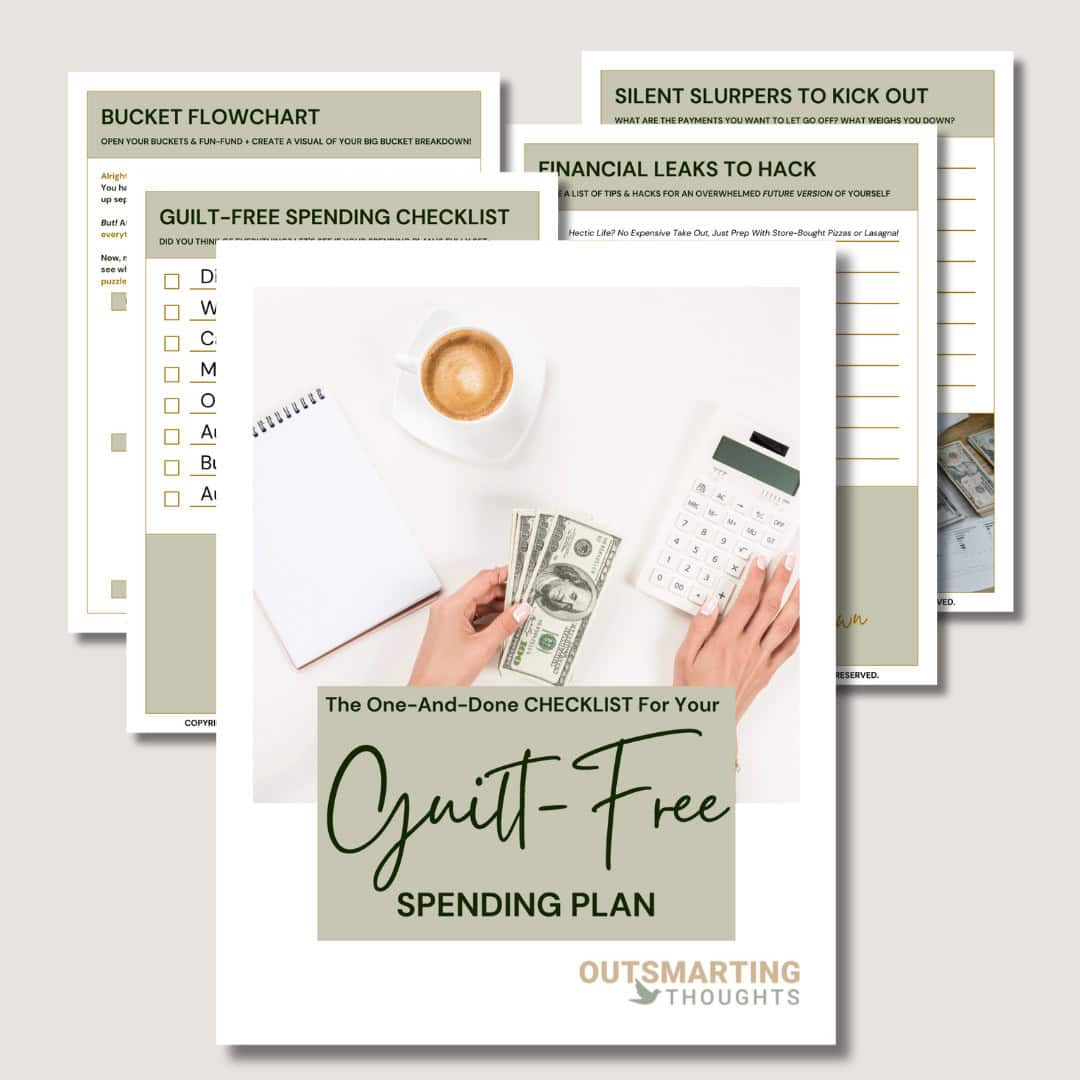
Owning a cashflow strategy is a skill that’ll give you some serious advantages in life. I think budgeting is an aligned action with taking life seriously, and I seriously believe life will reward you for it. If you’re not into high-maintenance strategies like ‘tracking your spending’ and just want to sit down ONCE to direct your financial future, our Guilt-Free Spending Plan Printable is the right cashflow strategy for you! Don’t let anybody outsmart you out of your own money and start budgeting today by simply filling out the form below:
Want a free
ONE-AND-DONE CHECKLIST for aGUILT-FREE SPENDING PLAN? Free up your bandwidth and stop overthinking with this
FREE One-And-Done Checklist for your Guilt-Free Spending Plan!
Simply fill out the form below to get this strategy
delivered straight to your inbox!
Why Punishment Makes It Worse
Most people treat shopping addiction like a crime scene. Overspend, then punish. That cycle of guilt, shame, and self-hatred is a surefire way to keep the addiction alive. And let me tell ya, the more you punish, the more your brain craves a hit to escape that pain. It’s a trap.
The problem is this: you confuse action with identity. But buying impulsively is a misaligned action. It does not define you as a bad person. When you let shame rule, you’re just layering pain on top of unmet needs. And that means you’ll need another dopamine hit to cope.
RELATED POST:
How to Avoid Impulse Buying When You’ve Been Told It’s Just a “Willpower Problem”
Caring for yourself after a financial slip is not weakness. It’s a caring strategy. When you respond with curiosity instead of judgment (asking, what did I actually need at that moment?) you break the loop & shame-spiral. Suddenly, the act of overspending becomes a teacher, not a life sentence.
Excuse me being frank, but punishment is lazy and even toxic. It requires no analysis, no growth. Care, on the other hand, demands strength. It means facing the discomfort and deciding to treat yourself like a normal, decent, feeling human being. That choice alone builds resilience and frees you from endless self-sabotage. Because shopping addiction shrivels when compassion replaces condemnation.
Build A Life That Makes Dopamine Work For You
To break free from shopping addiction, you can’t just stop buying. Instead, you need to build a life that excites you so much, that the mall feels irrelevant. That means meeting your unmet needs, tending to your emotional world, and designing your days with intention.
Pause & analyze the situation: what’s the boredom masking? Do you crave adventure? Connection? Creative challenge? Once you decode the real need, you can redirect that restless energy toward something that truly expands your life. Shopping was never the answer. It was the stand-in for living fully.
What I would also like you to consider is that dopamine is not your enemy. It’s a tool. You can train your brain to get dopamine from building projects, chasing meaningful goals, and investing in experiences that leave you proud; not regretful. That’s what I call rebelling against staying small. You’re not here to decorate your life with empty purchases. You’re here to self-actualize. If you want to learn more about a Dopamine Dosing Discipline, we have a whole series dedicated to exactly that subject.
Sorry for not sugarcoating, but half-assing life is a waste of your potential. Shopping addiction fades when you finally decide to feed your soul instead of your shopping cart. And once you taste the kick-ass confidence of a life that feels aligned? You won’t trade it back for any dopamine hit that money can buy.
Shopping Addiction (Summary)
Shopping addiction is rarely about the stuff. It’s about unmet needs, boredom, and dissatisfaction. Our culture tempts you at every turn, but your self-judgment keeps you stuck. When you separate your identity from your actions, the shame dissolves, and you can see the truth: your behavior is a signal, not a sentence.
The tools are simple but powerful: a bucket list with prices, a cashflow strategy that matches your wiring, and curiosity instead of punishment when you slip. Combined with emotional care and a plan to meet your unmet needs, you set yourself up for lasting change.
Imagine a life where you wake up energized, chasing goals that excite you more than any sale could. Picture yourself proud of the way you live, investing money in adventures, growth, and experiences that actually resonate. That’s the real upgrade.
I wish you the absolute best. You’ve got the fire to kick this habit, rebel against staying small, and create a life that feels too damn good to escape from.
This post was all about shopping addiction, so you can stop half-assing life and finally live it full out.
We aim to help you out as much as possible, but please keep in mind that the content is only for general informational and educational purposes. We offer our services based on independent research and life-experience only, and so our strategies can never serve as a substitute for professional advice. Trust me, we do not have 'everything figured out', are all still huge works in progress, but hey, what works for us, might work for you too! This is allll up for you to decide... It might not work for you, and that's okay, so cherrypick the stuff that resonates and leave the stuff that doesn't, and let's go!